


In a KOHO vs. Neo showdown, Neo comes out on top, mostly thanks to its excellent credit cards.
This article compares Neo and KOHO, specifically across categories such as credit-building services, cash back, monthly fees, and interest rates. We'll also explain the additional services each offers, so you can work with a company that has everything you're looking for.
Key Takeaways
- Neo offers better products and services than KOHO, but they're very similar in many ways.
- Neo offers several highly rated credit cards, including regular and secured cards, while KOHO has 3 prepaid credit card options.
- Neo's fees are lower on average, and you can waive some with a Neo credit card.
- KOHO's credit-building tool is more accessible than Neo's.
- Wealthsimple is another fintech worth considering, with similar products and features.
Never miss an amazing deal again + get our bonus 250+ page eBook for FREE. Join 50,000 other Canadians who receive our weekly newsletter – learn more.
What we love about KOHO
KOHO is a Canadian fintech company that only operates online – no physical stores are available in Canada. It offers a hybrid chequing/savings account paired with a prepaid credit card.
KOHO also offers:
- Prepaid travel cards: KOHO's newest prepaid offering is a travel Mastercard that includes a free eSIM for travelling abroad. You'll also avoid foreign exchange (FX) fees, get fraud protection, and enjoy travel offers from partners like Expedia and Booking.com.
- Credit building: This service helps you build your credit score while you work toward personal financial goals. It's essentially a small personal line of credit that helps you build a positive payment history and improve your credit score.
- Cash advances: Subscribe to the Cover bundle and get access to an instant, interest-free cash advance of up to $500. The plan also includes a free credit report and access to financial coaching.
- Lines of credit: Apply for a line of credit through KOHO's partner, Fora. Your approved amount can range from $1,000 – $15,000. As this is a line of credit, you'll only pay interest on the actual amount you use.
- Buy now, pay later: Break a large purchase into smaller, equal monthly payments for a small fee. By repaying the purchase with a 3-, 6-, or 9-month term, you could save on the interest you would have been charged.
- International money transfers: Get the best rate when sending money abroad, since KOHO uses the live exchange rate. KOHO's transfer fees are low, and funds move within minutes.
- Crypto: With low trading fees, you can make crypto purchases directly from your KOHO account. You won't pay FX fees because all coins pair with CAD.
| KOHO Pros | KOHO Cons |
|---|---|
| Services tailored for newcomers and those building credit | Monthly fee required to access all credit-building and account features |
| Earn high interest rates on account balances | Fees for ATM use |
| Access to financial advisors and credit-building tools/education | No personalized product recommendations |
| Highly rated app with budgeting and goal-setting features |
What we love about Neo Financial
In the other corner is Neo Financial, another Canadian fintech offering a suite of financial products.
Its lineup of services is pretty extensive:
- Bank accounts: With both a chequing and savings account, Neo has the bases covered. The chequing account is no-fee and comes with a prepaid credit card that earns cash back. The savings account boasts as high as 2.75%.
- Mortgages: Get pre-qualified online in minutes for mortgages with terms of up to 5 years. Then, work with an agent online or over the phone to submit documents and get your loan.
- Credit cards: Whether you're looking for a cash back credit card, a card with travel benefits and perks, or one that helps you build your credit score, Neo has you covered.
- Investments: With personalized portfolios through OneVest, account managers work behind the scenes to help clients achieve their investment goals.
- Credit-building opportunities: Depending on your tier, a Neo membership gives you access to its credit-building tool, credit score monitoring, ATM fee waivers, and FX fee waivers on credit card use.
- Budgeting tools and personalized financial insights: Neo Insights provides big-picture analyses of your spending along with detailed breakdowns of your daily buying patterns, so you can take charge of your spending habits.
| Neo Pros | Neo Cons |
|---|---|
| Includes a virtual credit card you can begin using before your physical card arrives | Interest on savings depends on your membership tier |
| Offers mortgages for new homeowners or those looking to renew their loans | No ability to deposit cash or cheques |
| Can combine savings balances with another account holder | No physical branches to visit |
KOHO vs. Neo: Interest rates
The winner: KOHO
KOHO has a dedicated high interest savings account (HISA) that's free to open and requires no minimum balance. When you open the account, you'll select a goal/plan that determines your exact interest rate. These HISAs have interest rates that range from 0.5% to 3.5% – sometimes even higher with promotional offers.
Your KOHO chequing account also earns interest, but the amount depends on your KOHO plan. For instance, you'll earn 2% interest with the free KOHO Core Account, but the Everything plan earns 3.5% on your balance.
Neo also pays interest on your chequing account balance, but just 0.1%. And while you can no longer open the previous version of a Neo HISA, there is now the Neo Savings Account, their revamped HISA.
| Account Type | KOHO Rates | Neo Rates |
|---|---|---|
| Savings | * 0.5% – 3.5% | * 1.25% (no longer opening new accounts) * Neo Savings: 2% – 2.75% |
| Chequing/hybrid | * 2% – 3.5% | * 0.1% |
KOHO vs. Neo: Credit cards
The winner: Neo
With its extensive lineup and credit cards tailored to just about anyone's needs, Neo wins this category.
KOHO doesn't offer many credit cards. You're basically issued a prepaid Mastercard that matches the KOHO plan you sign up for:
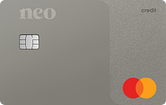
On the other hand, Neo offers a solid lineup of Mastercards, both secured and unsecured, with benefits like cash back and travel offers.
Here are some of your Neo credit card options, including Canada's best secured card:
Neo also works with United Airlines and Cathay Pacific to offer co-branded cards.
KOHO vs. Neo: Cash back
The winner: Tie
Both KOHO and Neo offer cash back with their chequing/hybrid accounts, but we focused on credit cards here.
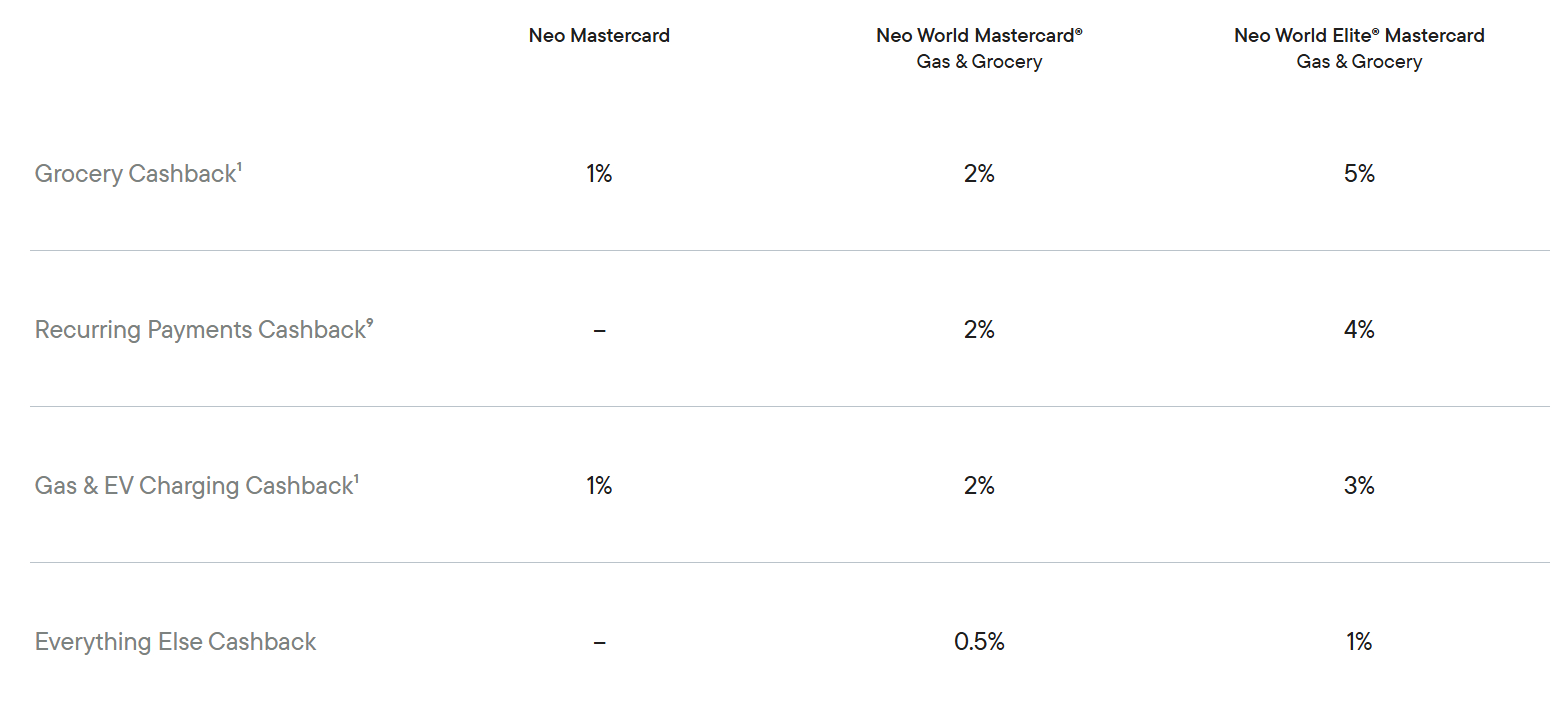
When it comes to credit cards, Neo cards offer the higher cash back rates – however, they have monthly spending caps of $1,000 per category. KOHO has lower rates, but no limits on what you can earn.
With Neo, you'll earn anywhere from 0.5% to 5% cash back, plus up to 15% back when you shop with Neo partners:
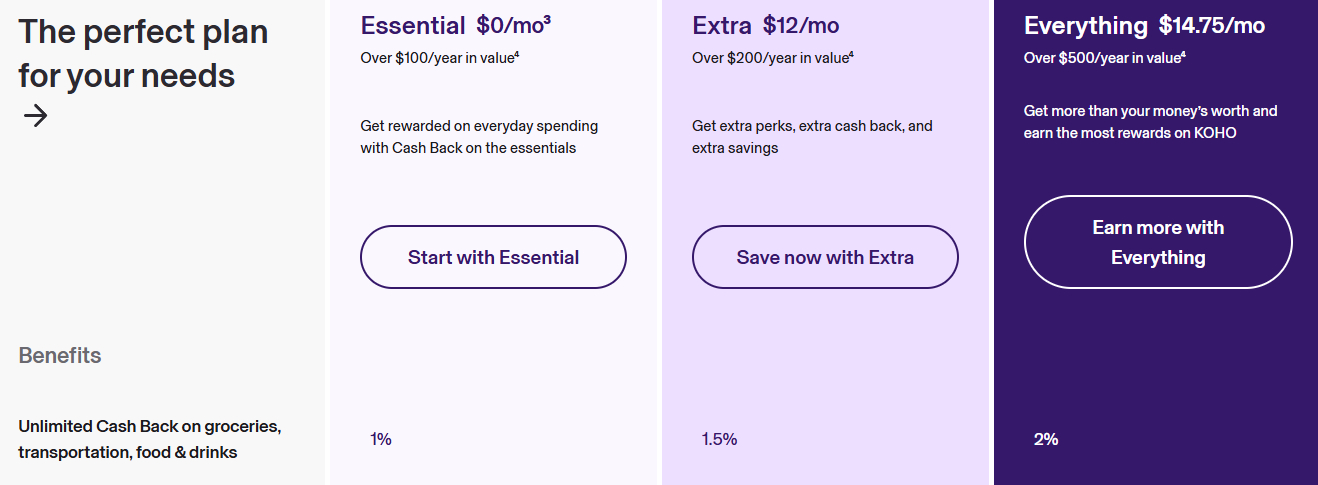
With KOHO, the cash back you earn depends on your plan – Core, Extra, or Everything. Instead of earning cash back based on purchase category or partner, you'll earn up to 2% on everything you buy.
KOHO vs. Neo: Credit building
The winner: KOHO
Both KOHO and Neo use similar credit-building strategies. With KOHO, you choose a membership plan/tier, which may or may not include a discount for the KOHO credit-building service. With this service, KOHO reports your monthly payment to Equifax, which can help improve your score.
Each KOHO membership level offers different features, with the premium level giving you the most perks. Note that these plans don't automatically include the Credit Builder service. Instead, only the 2 more premium memberships offer discounts:
- Core: Free credit score, Credit Builder available for a fee
- Extra: Free credit score, Credit Builder at 30% off
- Everything: Free credit score, free credit report, 50% discount on Credit Builder
Neo also offers 3 membership plans, but, as with KOHO, only 2 of them can help you build your credit by reporting payments to TransUnion:
- Build: Free credit score monitoring and credit builder tool
- Grow: Free credit score monitoring and credit builder tool
KOHO vs. Neo: Monthly fees
The winner: Neo
Comparing KOHO vs. Neo's monthly fees shows that Neo is more affordable on average, though its top tier is a few cents more per month. Plus, Neo offers the opportunity to waive the Build fee if you have a qualifying credit card.
KOHO:
- Core: $0
- Extra: $12 per month
- Everything: $14.75 per month
Neo:
- Essentials: $0
- Build: $0 with a Neo World Elite card, otherwise $9.99 per month
- Grow: $14.99 per month
At the time of writing, Neo is planning to offer another membership tier called Start. We don't know when it will be available, but the Neo site says "coming soon." It will cost $0 if you have your paycheque on autodeposit, or $4.99 otherwise.
KOHO vs. Neo: Mobile apps
The winner: Neo
It's close, but Neo takes a slight lead when it comes to mobile app scores. Reviewers note that the app is very easy to use and offers many useful features – particularly the bill scheduling tool.
KOHO's score on Google Play lags slightly behind. Some unhappy users claim that the quality of KOHO's customer service is declining.
| Platform | KOHO | Neo |
|---|---|---|
| App Store | 4.8 | 4.8 |
| Google Play | 4.4 | 4.8 |
Overall winner: Neo
Neo wins this competition, but it's tricky to compare KOHO vs. Neo as their similar services are structured differently, with unique ways to waive plan fees.
That said, Neo's very impressive credit card lineup and lower fees give it more value – and appeal – than KOHO.
Best alternative: Wealthsimple
You might initially think of Wealthsimple as an investment company, but it competes with KOHO and Neo. Wealthsimple offers:
- Retirement accounts
- Mortgages
- Business accounts
- Tax filing software
- Chequing accounts
- Credit-building tools
Here's an overview of the Wealthsimple Chequing account:
| Features | Details |
|---|---|
| Monthly fee | $0 |
| Card access | Visa Platinum Prepaid card |
| Transactions | Free and unlimited |
| Foreign exchange fees | $0 |
| Interest rate | Up to 2.25% |
| ATM fees | Reimbursed |
| Cheque deposits | Mobile cheque deposit |
| Bank drafts | Order via mobile app |
| Cheques | Free book of cheques when paycheque autodeposit is set up |
Membership plans
While Neo wins the KOHO vs. Neo Financial showdown, you should understand how their membership plans work before deciding which is the right fit for your needs.
The biggest difference to highlight is this: If you have a KOHO credit card, you must also have a KOHO plan. Neo memberships don't require this.
| Details | KOHO | Neo |
|---|---|---|
| Monthly fees | * Core: Free * Extra: $12 * Everything: $14.75 | * Essentials: Free * Build: $9.99 (free with qualifying credit card) * Grow: $14.99 |
| Credit-building tool | * Core: Available for a fee * Extra: 30% discount * Everything: 50% discount | * Essentials: N/A * Build: Included * Grow: Included |
| Credit bureau | Equifax | TransUnion |
| Credit scores | * Core: Free * Extra: Free * Everything: Free | * Essentials: N/A * Build: Free (with monitoring) * Grow: Free (with monitoring) |
| Credit reports/monitoring | * Core: N/A * Extra: N/A * Everything: Free reports | * Essentials: N/A * Build: Free monitoring * Grow: Free monitoring |
FAQ
Is Neo Bank trustworthy?
Yes, Neo Financial is trustworthy. It was founded in 2019 and has been expanding ever since. It holds a 4.3-star rating out of 5 on Trustpilot, and its 256-bit encryption protocol mirrors the security standards of other major Canadian financial institutions.
Is KOHO actually good?
Yes, KOHO is a solid choice for people who want a hybrid chequing and savings account, and those who want to work on their credit scores. KOHO offers a few affordable membership options that include tiered discounts to its credit-building tools.
Does KOHO actually help build credit?
Yes, it can, if you sign up for KOHO's Credit Building service. This gives you a line of credit that's reported to Equifax, and you don't pay any interest on the loan. With this service and consistent, on-time payments, your score can gradually improve.
Is Neo a good credit card to have?
Yes, Neo offers a few fantastic World Elite Mastercard options. The Neo World Elite Mastercard - Gas & Grocery, Neo World Elite Mastercard - Shop & Dine, and Neo World Elite Mastercard - Everywhere are some of the issuer's best cards, all of which also include free Neo memberships.
Which wins the Neo vs. KOHO matchup?
Ultimately, the best fintech for you depends on what you're prioritizing. That said, Neo has very strong Mastercards worth considering, and its membership fees are slightly better than KOHO's tiers. Its mobile apps are also better rated than KOHO's, though it's a very small difference.
creditcardGenius is the only tool that compares 126+ features of 250 Canadian credit cards using math-based ratings and rankings that respond to your needs, instantly. Take our quiz and see which of Canada's 250 cards is for you.





 GC:
GC: 




























Comments
Leave a comment
Required fields are marked with *. Your email address will not be published.