


As they become more popular, you may be wondering, "What is a digital wallet?"
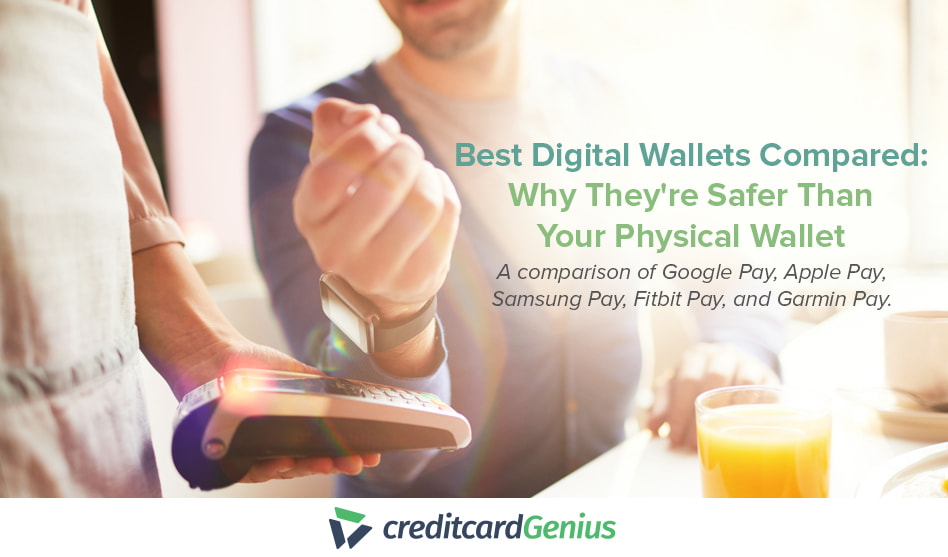
A digital wallet is an app that stores your debit and credit cards on your phone or device, allowing you to tap your phone/device for payment instead of a physical card.
These digital products are considered by many to be safer than most other payment options, providing significant peace of mind.
This article explains the finer details of what digital wallets are and how they work, along with reviews of the most popular apps and options available.
Key Takeaways
- Digital wallets make it easy to store your credit or debit information on your mobile phone, so you don’t have to carry physical cards.
- Most digital wallets require multiple layers of security, like authentication, PINs, facial recognition, or fingerprints.
- Once you’ve entered your card information into a digital wallet of your choice, you won’t have to enter it again.
- The most popular digital wallet apps are Apple Pay, Google Pay, Samsung Wallet, and Garmin Wallet.
Never miss an amazing deal again + get our bonus 250+ page eBook for FREE. Join 50,000 other Canadians who receive our weekly newsletter – learn more.
What is a digital wallet?
A digital wallet is an app that securely stores your payment information on your mobile device. It lets you complete purchases using near-field communication (NFC) technology – also known as tap – from your phone, instead of your physical card.
You might hear people use terms like "mobile wallet" or "electronic wallet" instead of "digital wallet." They all mean the same thing.
How to get a digital wallet
To get one, simply find a digital wallet app that's compatible with your phone's operating system. Once you've narrowed down your options, pick an app that you prefer and download it, if needed.
Many phones already have built-in digital wallets, but you can also use third-party apps.
Depending on the app, you'll be prompted to set up security, which might mean using your fingerprint or creating a passcode. Then, you'll enter the following info:
- Credit card number
- Expiry date
- CVV number
- Billing address or postal code
Once the card is added, you're all set. You won't have to re-enter credit card details again.
Are digital wallets safe?
Digital wallets are arguably safer than regular wallets.
The information stored on your device is heavily encrypted and is locked with some form of authentication – usually a passcode, password, or biometric identification, such as your fingerprint. And, like tapping a card, using a digital wallet is a surefire way to avoid credit card skimming.
Even if you lose your phone, whoever finds it won't be able to use your payment info because they can't unlock your digital wallet. And with the high-grade encryption, it's less likely anyone can hack into it.
Compare this with your physical wallet. If you lose it, whoever finds it can use your cards to make tap payments or make online purchases with little difficulty.
That said, there are steps you can take to help keep your digital assets safe. McAfee – a leader in online security – recommends that you:
- Use a passcode lock for your phone
- Set a unique passcode for your wallet
- Update your OS and apps regularly
- Only download digital wallet apps from official app stores or the provider's website
- Learn how to remotely lock or erase your smartphone
Other tips include:
- Don't use your digital wallet on an unsecured WiFi network
- Set a spending cap on large purchases
- Only purchase from businesses or individuals you trust
- Avoid linking your digital wallet app to social media apps
- Monitor your transaction history
- Secure your mobile information in case you lose your device
The best digital wallets in Canada
Here are some of the most popular digital wallets currently available:
| Apple Pay | Google Pay | Samsung Wallet | Garmin Wallet | |
|---|---|---|---|---|
| Availability and/or Compatibility | * iPhones * Apple Watches * Macs * iPads * Apple Vision Pro * Any device with a browser* | * Android mobile devices that have NFC * Supported smartwatches (Fitbit, etc.) | * Samsung Galaxy phones * Galaxy watches | * Select Garmin watches * Compatible bike computers |
| Authentication and Security | * Passcode * Touch ID * Face ID * Issuer verification * Two-factor authentication | * PIN * Pattern password * Fingerprint * Retina scan | * PIN * Fingerprint * Iris scan | * Passcode |
| Where it Works | Anywhere with Apple Pay or NFC (tap) payment support | Anywhere with Google Pay or NFC (tap) payment support | Anywhere with NFC (tap) payment support | Anywhere with NFC (tap) payment support |
| Supported Payments | * Credit cards * Debit cards * Prepaid cards * PayPal | * Credit cards * Debit cards * Gift cards * Prepaid cards | * Credit cards * Debit cards * Gift cards * PayPal | * Credit cards |
| Special Features | * Enhanced payment sheet * Dynamic buttons * Pay multiple merchants with a single transaction | * None | * Add membership and rewards cards to your wallet | * Supports payments for some transit systems |
| Supported Banks | Supported banks | Supported banks | Supported banks | Supported banks |
* Apple Pay can be used for purchases on non-Apple devices, like a PC, but you'll also need your iPhone or another Apple device that can scan a code to pay.
Apple Pay
Participating banks (not exhaustive): Amex, BMO, Brim, Canadian Tire, CIBC, Desjardins, KOHO, MBNA, National Bank, RBC, Scotiabank, Tangerine, TD
Apple Pay is already included on your Apple products. You simply need to open the "Wallet" app, add your cards, and enter your security passcode (or use whichever security and authentication feature you set up). Double-click the lock button, select the credit or debit card you want to use, and tap your device against the card machine to make a payment.
Pros:
- Cash back available with select cards
- No internet access required to use
Cons:
- Only works with newer Apple products
- Biometric security features can glitch
Google Pay
Participating banks (not exhaustive): BMO, Brim, Canadian Tire, CIBC, Desjardins, KOHO, National Bank, RBC, Scotiabank, Tangerine, TD
If you don't already have Google Pay on your device, download it from the Google Play Store and open the app. After you've followed the prompts and added your cards, you'll set up a secure screen lock.
You'll also need to open your device's Settings app and type "NFC" (for near field communication). From there, find Google Pay, and you're all set.
Pros:
- Extensive list of biometric security options
- Integrated with several Google products
Cons:
- Not available for use with Apple products
- If you're using an unsupported lock screen method, you may need to unlock your phone twice to use Google Pay
Samsung Wallet
Participating banks (not exhaustive): Amex, ATB, Brim, KOHO, Manulife, RBC, Rogers, Scotiabank, Simplii, Stack, Tangerine, TD, various credit unions
Start by downloading Samsung Pay from your phone's app store, then sign in to your Samsung account once you've opened the app (it should also ask you to set up an authentication method).
To use Samsung Pay, swipe to find the card you want to use, then authenticate your choice. Touch the back of your device to the card machine and enter your PIN if prompted.
Pros:
- Offers rewards program
Cons:
- No longer uses magnetic secure transmission (MST)
- App can glitch or run slowly
Garmin Wallet
Participating banks: ATB, Affinity Credit Union, Aura, Brim, CWB, Questrade, Stack
If you have a Garmin watch that supports Garmin Wallet, you can set up your digital wallet through the Garmin Connect mobile app. Ask it to "Create Your Wallet" and follow the prompts to finish setting it up.
To pay, select Wallet and enter your 4-digit passcode. Hold your watch up to the payment terminal within 60 seconds to complete the payment.
Unfortunately, Garmin Wallet doesn't currently support debit cards in Canada. Also, users note that Garmin support in Canada is limited.
Pros:
- Uses watch-specific card numbers and transaction codes for each purchase
- Available anywhere contactless payments are accepted
Cons:
- Works with a limited number of banks
- Does not work with American Express
- Does not currently support debit cards
FAQ
What is a digital wallet and how does it work?
A digital wallet is a secure app that stores credit or debit card information, so you don't have to manually enter your card details or swipe or tap your physical card. Digital wallets require authentication in order to make purchases, so they're secure to use.
What are the disadvantages of using a digital wallet?
From a financial standpoint, the biggest disadvantage of a digital wallet is how easy it is to set up and use. Digital wallets remove the friction of having to take out your wallet to pay for things. The ease of tapping to pay can make it all too easy to overspend.
How do I set up a digital wallet?
You'll usually need to download the app on a compatible device and follow the prompts to get started. Set up security with a PIN, facial recognition, or your fingerprint, then enter your card details and verify the card with your bank.
What is the safest digital wallet?
Using secure internet networks when making purchases goes a long way in securing your transactions. Otherwise, the safest digital wallets tend to be the big apps like Google Pay and Apple Pay, since they offer robust encryption and multiple layers of security.
What's available for e-wallets in Canada?
Digital wallets like Google Pay, Apple Pay, Samsung Wallet, and Garmin Wallet are all available in Canada, but you'll need to check whether your bank supports the wallet type that you want to use. You'll also need a compatible phone or device.
Is a digital wallet and an e-wallet the same thing?
Yes, the terms "digital wallet," "e-wallet," and "mobile wallet" all mean the same thing. They're a way of storing credit or debit card information on your phone, so you can easily pay without using a physical credit or debit card.
creditcardGenius is the only tool that compares 126+ features of 253 Canadian credit cards using math-based ratings and rankings that respond to your needs, instantly. Take our quiz and see which of Canada's 253 cards is for you.


 GC:
GC: 



.jpg)


















Comments
Leave a comment
Required fields are marked with *. Your email address will not be published.
Showing 3 comments